


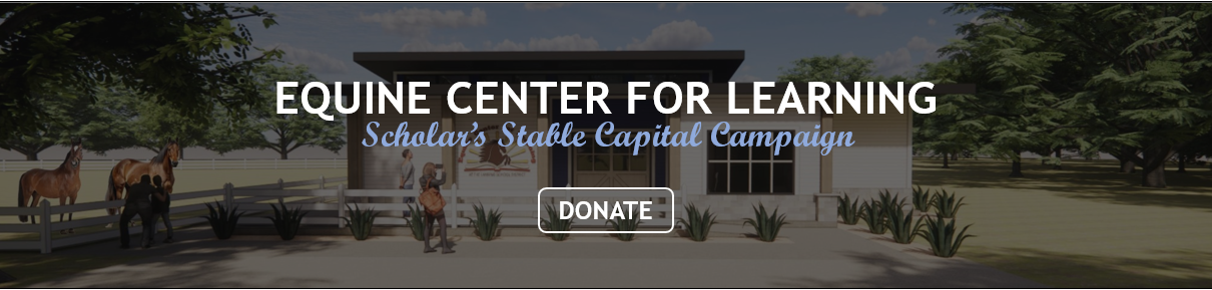
Since our founding in 1979, the Equine Center for Learning (ECL) has worked to provide individuals of all abilities with opportunities to grow, heal, and thrive. Together, we can make sure that ECL remains a place where people of all abilities can find strength, purpose, and joy through equine-assisted services.
Expand Educational Opportunities
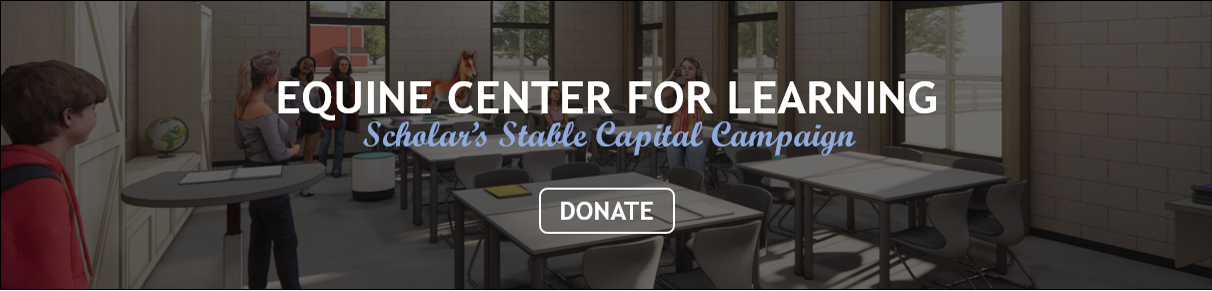
This addition will provide a modern teaching and learning space to enhance educational opportunities for students and community riders. Access to high-speed internet and temperature-controlled spaces will increase the diversity of educational offerings available at the Equine Center for Learning.
Improve Accessibility
Students, staff, and guests with diverse mobility needs will have an easier time navigating our facility and accessing the restrooms.
Increase Safety and Security
Creating a central, temperature-controlled gathering space will enhance safety and security by supporting administrative supervision, organization, and comfort for participants, staff, and guests.
Enhance the Visitor Experience
An obvious campus office and a clear entryway will improve traffic flow and offer a welcoming space for visiting students and guests, while retaining privacy for teaching and administrative spaces.
Promote Sustainability
Energy-efficient systems and eco-friendly practices will promote environmental sustainability while protecting the natural resources of the surrounding property.
The Impact of Equine-Assisted Services
Every interaction with a horse is an opportunity to learn. Whether a participant is leading a horse through an obstacle course, grooming, or simply spending time together each experience provides opportunity for growth, connection, and self-discovery.
Simply being in a farm environment and spending time with horses has been shown to reduce anxiety and improve emotional well-being with direct horse interaction producing the greatest benefits. A Michigan State University Study found that 30-minutes at a horse farm improved participants' mood and reduced anxiety, with the greatest impact occurring when individuals directly interacted with horses (Skelly et al., 2023). This is just one example of the growing body of research demonstrating that equine-assisted services can support self-esteem, emotional regulation, social development, and overall well-being.
Social
Working alongside horses encourages participants to communicate clearly, collaborate with others, and develop healthy relationships. Horses respond to body language, trust, and consistency which helps participants strengthen interpersonal skills in a supportive environment.
Emotional
Horses naturally respond to human emotions and behaviors, providing immediate and honest feedback that helps participants develop self-awareness and emotional regulation. Horses help create a "no judgement" zone where participants can practice coping strategies, build resilience, increase confidence, and experience a sense of accomplishment.
Physical
Whether participants are riding, leading, grooming, or caring for horses, equine-assisted services encourages movement, coordination, and physical engagement. Activities that incorporate balance, motor planning, and both fine and gross motor skills support physical development while building confidence through hands-on experiences.
Academic
Academics and horses? Absolutely! The Equine Center for Learning, offers Horse Powered Reading and Horse Powered Math, providing students with experiential learning opportunities. By combining literacy and math concepts with hands-on activities alongside horses, participants build academic skills while increasing confidence, motivation, and engagement in learning.
Learn More:
Title IX prohibits discrimination on the basis of sex in any District program, service or activity including, but not limited to: educational programs or activities, extracurricular activities, student services, academic counseling, discipline, classroom assignment, grading, athletics, transportation, etc.
Sexual Harassment (unwelcome sexual advances, requests for sexual favors and other verbal or physical conduct of a sexual nature)
Sexual Misconduct/Violence (rape, sexual assault, sexual battery, sexual exploitation and other forms of non-consensual sexual activity)
Stalking (repeatedly following, harassing, threatening or intimidating including by telephone, mail, electronic communication or social media)
Retaliation (adverse academic or other actions against anyone reporting or participating in an investigation of Title IX allegations)
 Sexual Misconduct PolicyComprehensive Title IX Training- Thrun Law Firm WebinarSexual Misconduct and Title IX Process
To report prohibited behavior or concerns with the Districts Title IX Coordinator, complete the form linked below.
If you are a district employee and would like to report prohibited behavior, please fill out the form on the Lansing School District Prohibited Behavior Reporting Portal. (You must be logged into your District Google account.)
If you are not a district employee and would like to report prohibited behavior, please email TitleIX@lansingschools.net.
| For Students: | For Staff: |
| Phil Janis | Erin Miracle |
| Civil Rights Compliance Specialist | Human Resources Manager |
| p.janis@lansingschools.net | e.miracle@lansingschools.net |
| (517)755-2808 | (517)755-2010 |
| 19 W. Kalamazoo | 519 W. Kalamazoo |
| Lansing, MI 48933 | Lansing, MI 48933 |
| Title IX Certificate of Completion | Title IX Certificate of Completion |
Title IX concerns can also be e-mailed to:
Lansing School District Office of School Culture Title IX Coordinator
TitleIX@lansingschools.net
4200 Wainwright Ave.
Lansing, MI 48933